Pride History Gallery
Images give public gatherings much of their historical immediacy. A street full of marchers, fabric moving above a crowd, a volunteer table under preparation, or a stage waiting at dusk can communicate scale and atmosphere before a written account begins.
Evidence and evocation
This distinction protects the historical record. An archival photograph is evidence created at a particular time by a particular maker. An interpretive illustration can evoke atmosphere without serving as evidence. Both can affect how a reader imagines the past, but only the first can document what appeared before a camera.
For authentic visual evidence, visit the public library's Pride photograph exhibit. Item descriptions and collection context help readers interpret who made an image, what it shows, and how it entered the archive. The local Main Street exhibition connects visual material to a longer event chronology.
What to notice
When studying historical images, look beyond the central banner or stage. Street width, crowd spacing, shopfronts, clothing, mobility aids, spectators, homemade materials, and the relationship between marchers and police can all provide context. Also ask what is outside the frame and which moments were less likely to be photographed.
Continue to the research guide for archival links or the history page for the event narrative.
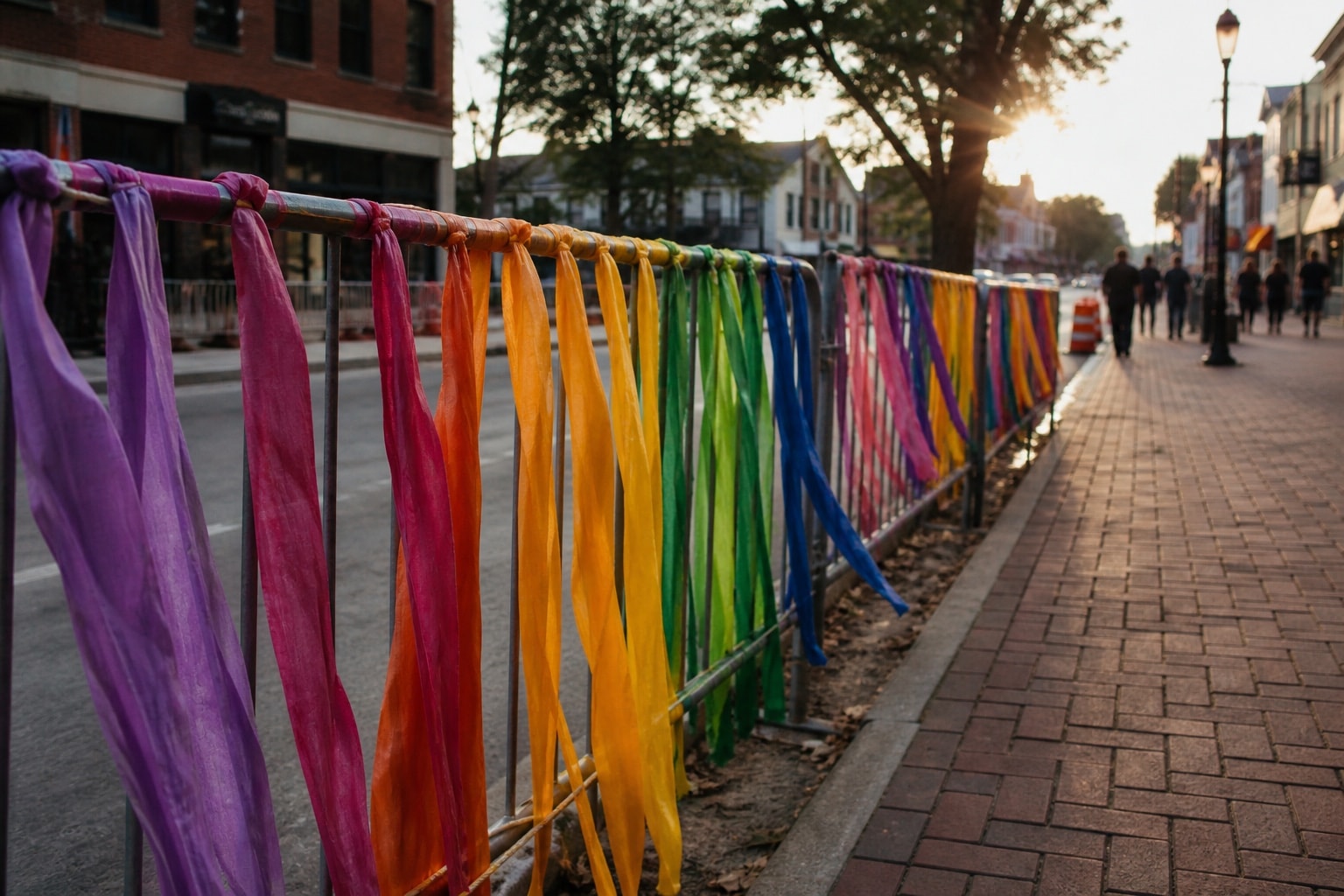
The quiet ribbon scene also makes absence visible. A public event leaves physical traces only briefly, while photographs and memories persist unevenly. That gap is why captions, dates, provenance, and honest labels matter whenever visual material is reused.