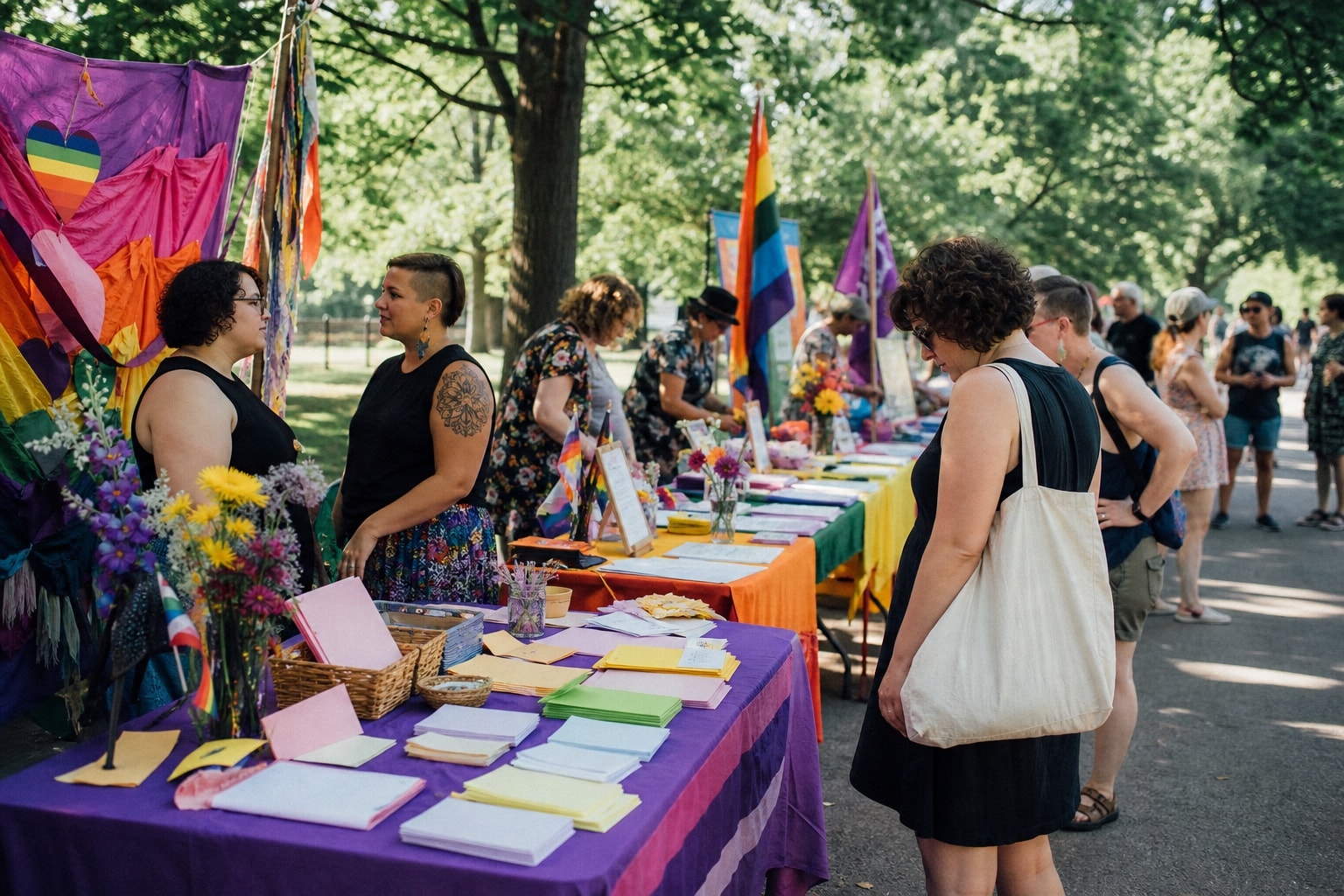
Vendors and Community Tables
Community and vendor tables helped turn Northampton Pride's rally into a temporary public marketplace of information, objects, food, and conversation. Period coverage confirms that these displays were part of the event. They surrounded the formal stage program with many small points of exchange, giving visitors reasons to circulate and meet groups face to face.
This is a historical overview, not a live vendor page. It contains no application, fee, deadline, payment, contact channel, or promise of event space.
Information in a human setting
A table can make an organization approachable in a way that a stage announcement cannot. Visitors can stop briefly, ask a question, pick up printed material, or return after considering what they have seen. For groups doing community work, the rally offered access to a large regional audience already gathered around shared interests.
These interactions also produced a documentary trail. Flyers, newsletters, buttons, programs, and small handouts can later reveal the language, priorities, and visual culture of a period. Archivists often use such ordinary material to understand movements that were not fully represented in formal institutional records.
A varied rally landscape
Not every display served the same purpose. Community groups could explain services or campaigns. Artists and makers could contribute creative work. Food providers supported a long event day. Event merchandise helped create a shared visual identity. The mix placed practical information beside celebration and made the rally feel less like a single performance than a temporary neighborhood.
Organizing that landscape required choices about space, circulation, access, setup, and cleanup. A successful table area needed visible paths and enough room for people to browse without blocking movement. It also required clear expectations for participants. Surviving summaries do not document all Northampton policies, so this reference does not invent them.
Reading tables as history
The national library's Pride portal demonstrates how printed ephemera can support LGBTQ historical research. Locally, the public image archive offers context for the visual world surrounding Northampton marches.
The interpretive illustration on this page evokes a colorful table area without showing a real vendor, product, logo, or historical display. That distinction matters: visual atmosphere can help readers imagine the spatial role of tables, but it should not be mistaken for evidence.
Community tables mattered because they made the rally participatory. A visitor could listen, browse, talk, learn, and contribute attention to many small efforts within one larger gathering. Their history belongs beside the march route and stage program because they helped create the social fabric of the day.