The Pride Rally
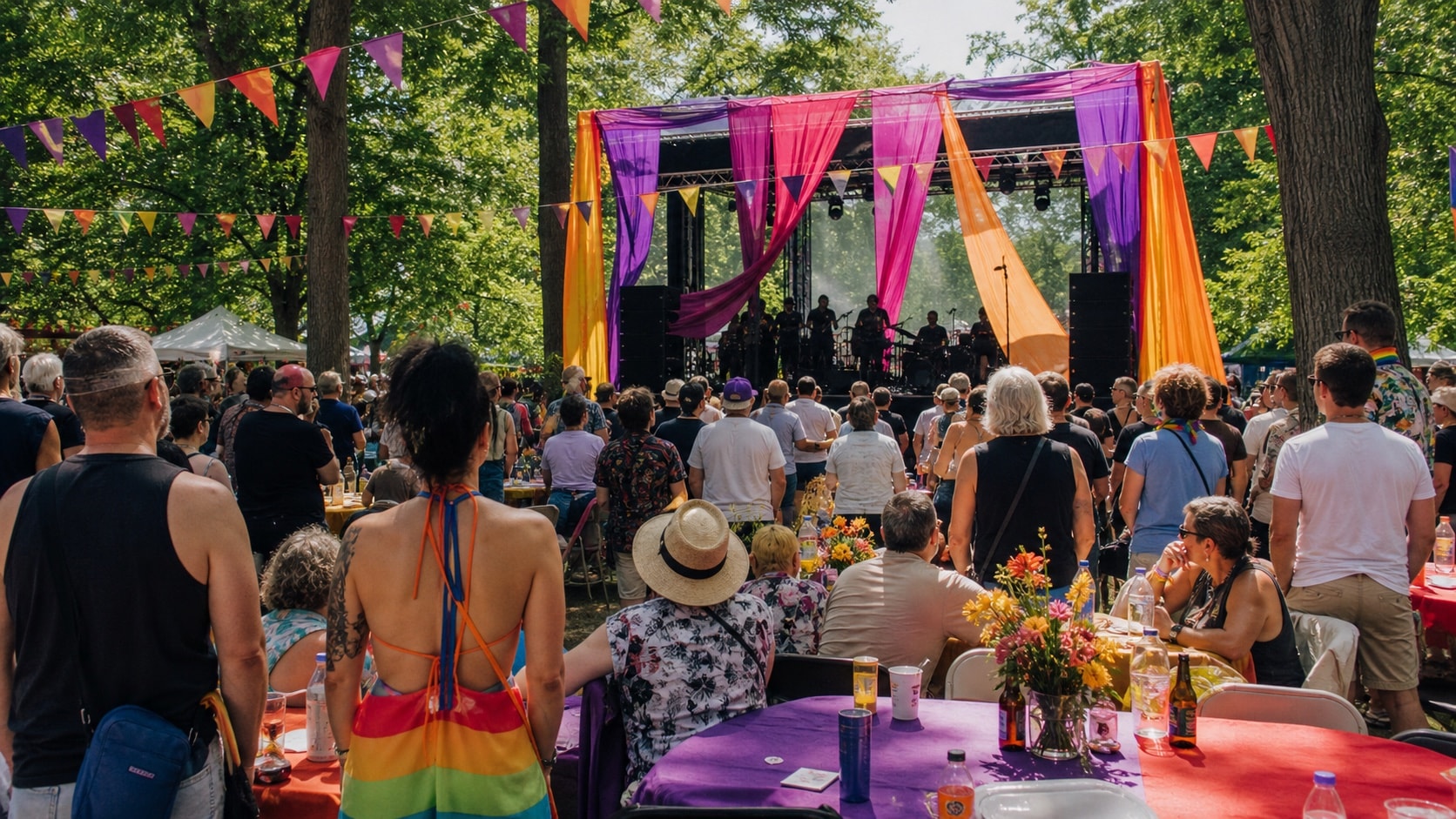
Where the march expressed collective movement, the rally created a place to remain together. Participants arrived from the procession and entered a program that combined civic speech, arts, community information, food, and conversation. The format let a large public event become a series of smaller encounters: listening near a stage, stopping at a table, meeting a neighbor, or simply resting within the crowd.
Contemporary reporting from the late 2000s describes music, spoken word, percussion, comedy, and drag among the event's entertainment forms. Community and vendor displays created another layer of activity. A family area was also mentioned in period coverage. This reference keeps that reference neutral, identifies no minors, and does not extend any historical participant's identity.
A public forum and a celebration
Pride rallies have often carried both political and festive purposes. Speakers can name urgent problems, remember community struggles, or call attention to civic participation. Performers make room for pleasure, experimentation, and cultural recognition. Northampton's rally joined those modes instead of choosing between them.
The annual themes reveal the balance. United for Equality in 2007 emphasized collective purpose. Vote with Pride in 2008 linked the gathering to public participation. Around those themes, the rally still made space for different voices and art forms. No single presentation could represent every person in a regional crowd, but the program created a shared setting in which differences were visible.
The stage and everything around it
A stage naturally attracts attention, yet much of a rally's community value develops outside the formal program. Tables allow local groups to explain their work and preserve printed material. Food and rest areas support a long day. Informal conversations connect people who might not otherwise meet. Volunteers answer questions, maintain shared spaces, and help one portion of the program move into the next.
The arts and entertainment page describes the historic range of stage formats without inventing performer biographies. The community tables page explains the informational marketplace around the rally without soliciting applications or payment.
Access as part of planning
A public gathering works only when organizers consider how people enter, move through, understand, and leave the space. Historical records do not provide enough reliable detail to reconstruct every Northampton access practice, so this page avoids claiming specifics. More generally, event planners must account for routes without steps, clear paths, usable viewing areas, understandable signs, rest opportunities, and multiple ways to receive information.
The federal public-accommodations guidance explains the legal framework that shapes access to many public-facing spaces. It is linked here as current general reference, not as evidence about a particular historic rally setup.
What the rally leaves behind
Rallies are ephemeral. Sound systems are removed, tables fold, and the site returns to ordinary use. Their surviving record is scattered across photographs, flyers, programs, reporting, and memory. Each source emphasizes something different. A program shows intended order; a photograph shows a moment; a participant account conveys feeling; a volunteer list reveals labor.
This reference treats the rally as the intersection of those records. Readers can move from this overview to the site's source guide for primary material.
The rally's historical importance lies in its ability to turn the end of a march into more than a destination. It was a temporary civic commons: a place to hear, perform, learn, celebrate, and recognize a community in public.
Because that commons was assembled and dismantled within a day, the surviving fragments deserve to be read together. A stage photograph, a volunteer task list, and a printed schedule each records a different part of the same temporary place.