Pride History in Northampton
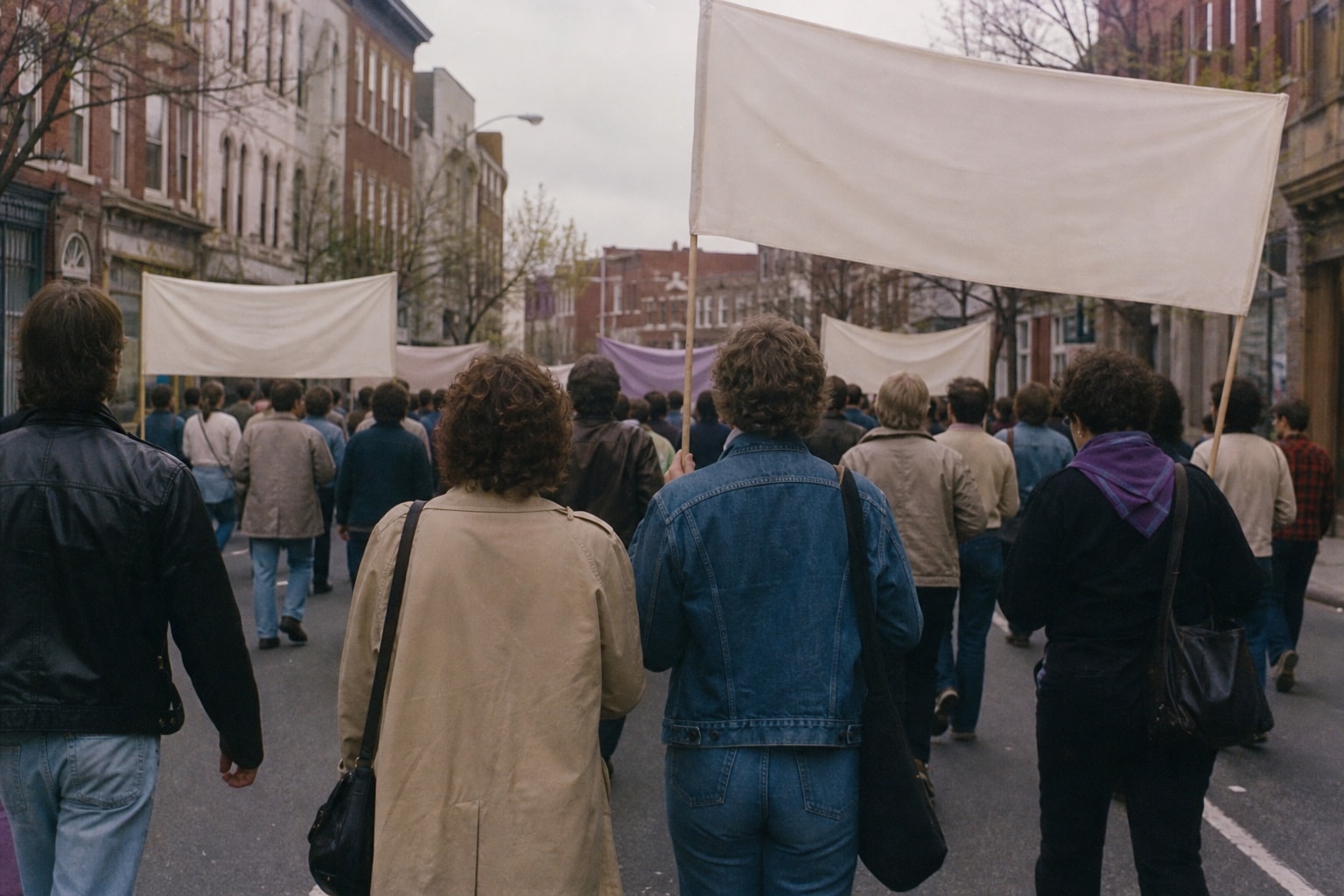
Northampton's organized Pride tradition took a decisive public form in May 1982. Participants in the first Northampton Lesbian and Gay Liberation March gathered near the Bridge Street School, proceeded along Main Street, and held a rally in Pulaski Park. That sequence—assembly, public procession, and communal rally—established a structure that would return in evolving forms for decades.
The event emerged during a period when visible lesbian and gay presence carried substantial social and personal risk. Marching through the commercial center was therefore more than a practical way to reach a park. Main Street was a civic stage. Occupying it collectively challenged the idea that queer life should be private, hidden, or absent from the city's public image.
From liberation march to expanding Pride
Language changed as the movement changed. Early event names foregrounded lesbian and gay liberation. Later organizing more explicitly named bisexual and transgender communities, and the vocabulary of Pride became broader still. Those changes were not merely editorial. They reflected continuing debates over who was represented, whose needs received attention, and how a regional gathering could make room for different experiences.
The planning structure also developed. By 2000, the body associated with the march was known as Northampton Pride March, Inc. Contemporary coverage in the following decade described an all-volunteer committee producing a substantial annual gathering. A growing event required more coordination, but its identity still rested on community labor rather than a permanent public institution.
The annual event as a historical record
Each year's march left several kinds of evidence. Photographs capture signs, clothing, expressions, streetscapes, and crowd scale. Programs and advertisements reveal the groups, businesses, and issues participating in public Pride culture. Volunteer applications show the invisible work beneath the day. News reports preserve themes and program details, though they often foreground only the most visible parts of the event.
Two themes documented in surviving period material illustrate how celebration and political purpose met. United for Equality framed the 2007 event around solidarity. Vote with Pride connected the 2008 gathering to civic participation. The slogans are brief, but when read beside volunteer lists, route descriptions, and rally coverage they help show how organizers understood Pride as both communal pleasure and public action.
Continuity and interruption
The annual gathering persisted for many years, adapting to new organizers and a changing community. The last in-person event produced by the original organization took place before the pandemic, followed by a virtual presentation in 2020. The organization did not later resume its annual event. The organization no longer runs the annual event; no current calendar or operating claims are provided.
That ending does not erase the tradition. Historical work separates an organization from the broader community life around it. The dissolved event producer is one part of the story; participants, archives, memories, and later independent efforts are other parts. Treating them carefully avoids implying that one organization owns the full history of Pride in Northampton.
How to investigate further
The strongest public sources are local. A curated exhibition on the Main Street marches connects the 1982 beginning to later decades. A library-hosted photographic collection provides visual primary sources. The national library's Pride history portal offers wider documentary context and routes into additional collections.
Readers should distinguish between evidence and evocation throughout this reference. Dates, themes, route descriptions, and organizational roles are grounded in historical sources. That boundary keeps the historical record useful while avoiding invented detail.
The resulting story is one of repeated public making. Northampton Pride was renewed every year by people who planned, marched, performed, documented, and gathered. Its most lasting artifact may be the expectation created by that repetition: LGBTQ life belonged on Main Street, visible to the whole city.